Where linguistic skills and passion come together
Welcome to sprach.fest!
*

Where linguistic skills and passion come together
My name is Eva Adelbrecht and I am the face behind sprach.fest: a one-woman business offering translation, interpretation, proofreading, and editing for the languages German, French, and English.
sprach.fest stands for my passionate approach to language: languages are a beloved tool for me, in my daily life as well as in my work. Being able to use this tool to mediate between different languages as well as to model and refine written texts makes my work worthwhile every day. In short, language is where my heart lies!
My expertise is based on my degrees in interpretation and translation studies acquired at the Centre for Translation Studies of the University of Vienna and Institut Libre Marie Haps, Brussels.
My passion for languages is the basis for sprach.fest quality.
In every step of the job, professionalism comes first. This is my way of ensuring that my translation and interpretation assignments meet the high expectations of my clients.
You have probably come across translations with a rather entertaining effect. But while such a translation may be amusing to everyone else, the author of the original text is not likely to find it very funny.
Quite frequently, however, translation errors are more subtle and may arise from the lack of knowledge about the conventions of the target culture. Although these flaws may not be obvious, they still may be the cause for some unpleasant surprises.
My aim is to provide my customers with high-quality translation and interpretation. In order to guarantee an optimal result, a translation strategy combining professionalism and problem awareness as well as putting the purpose of the target text at the centre of the work is essential. To achieve this aim I attribute great value to thorough research of the terminology of the field and to the consideration of specific cultural features and linguistic characteristics of the target language. Consultation with experts and colleagues and not least the dialogue with my clients are just as important to me.
This working style is characteristic of sprach.fest – a thorough handling of language that meets your high standards.
Do you have business partners abroad?
Do you want to make your work available to a broader audience?
Could your texts use an expert touch?
Then you are at the right place! As a language and text expert I will be happy to support you in any of these linguistic challenges.
I provide translations and text editing services for the following languages:
• German
• English
• French
For any other languages I will be happy to establish contact with one of my qualified colleagues.
Team work = quality control
To ensure an excellent result, my translations are all subject to revision by a second translator with regard to spelling, content and the correct use of terminology. This service is of course free of charge.
Working in a team further enables me to take on large projects and to carry them out quickly without compromising on our high quality (see FAQ).
Customized translations
Do you use your own corporate terminology? Or do you have any parallel texts you would like us to refer to? I will be happy to take your own specific terminology into account to meet your individual expectations.
Text types
Business correspondence, academic papers or theses, teaching materials, questionnaires, travel guides, brochures, websites, patient information sheets, contracts – as a professional translator I am familiar with a range of different texts and adapt my translations to the relevant conventions in the target language.
Have you suffered through presentations held in barely understandable English? Allow your speakers to give their talk in their native language and feel the difference!
Presentations, which tend to have undergone long and careful preparation, are given with the aim of being comprehended. When held in a foreign language, however, they often lose accuracy and persuasive power. This is where interpreters come in.
Hiring an interpreter can often prevent misunderstandings and awkwardness. A professional interpretation enables the best possible communication between speaker and audience: content, expert knowledge and character of the presentation are maintained.
If you decide to use interpreting services for your event, there are two options: simultaneous and consecutive interpreting (see FAQ).
Simultaneous interpreting occurs, as its name indicates, almost at the same time as the talk in the original language and requires simultaneous interpretation equipment (interpreting booth/mobile interpreting equipment). This type of interpreting works best at events with a large audience. When you hire a sprach.fest interpreter, I will be happy to assist you in organizing the necessary technical equipment.
When interpreting for very small groups (of 2-3 persons max.), the whispering mode is another option. For this type of simultaneous interpreting technical equipment is not necessary.
Consecutive interpreting on the other hand is rendered with a delay, that is, the interpreter takes notes during the speech and provides the interpretation after the speaker has finished a segment (approx. every 5-10 minutes). For consecutive interpreting no technical equipment is required.
Consecutive interpreting is mainly used for smaller groups or in environments outside of the conference room.
Each assignment is preceded by in-depth preparation by the sprach.fest interpreter. I thus ask you to provide me with useful conference-related materials. This enables me to guarantee high-quality interpretation in line with your internal terminology and your legitimate expectations as a sprach.fest customer.
Based on my broadly designed studies, I developed my first speciality in the fields of genetic engineering and biochemistry during my two-year employment (2004–2006) as an in-house translator at Häupl & Ellmeyer patent agency.
Since 2008, I have been active as a self-employed interpreter and translator. Thanks to my numerous interpretation assignments at the Vienna School of Osteopathy (WSO) as well as the postgraduate institute Mitha+Sonntag in Hamburg I have developed solid expertise – and also passion! – with regard to medical translation and interpreting assignments, especially with a focus on osteopathy.
Besides chemistry and medicine, permaculture figures on my list of favourite subjects. Since 2016, I have worked as an interpreter at Krameterhof, a permaculture farm and its team, internationally renowned for their practices. Josef Holzer, farmer at Krameterhof, is passionate about permaculture and therefore teaching interested people about his lifestyle and convictions. I accompany these guided day tours and different seminars as an interpreter for English and French over the summer time.
My love for my mother tongue German and for shaping and improving texts has led me to establish a new expertise. Playing with language, refining a text, improving it without compromising the author’s style; the task of a proofreader and editor is not always easy, but it is one that I thoroughly enjoy. The types of texts I work on are quite diverse: scientific articles and master’s theses, chronicles, novels, but also short stories or children’s books have been, among others, on my list so far.
Translations
The fees for my translation services are calculated on the basis of standard lines. A standard line comprises 55 characters including spaces; the number of standard lines is derived from the length of the translated text. The line rate differs depending on the technicality of the text and the urgency of translation.
Proofreading
The costs for proofreading and other forms of text editing are calculated on the basis of either standard pages or hourly rates.
Timeframe/ Express translations
The timeframe is of course also significant. A brief assessment of your text enables me to predict how long it will take me to translate or proofread the document.
Is your translation very urgent? Of course I will do my best to reduce the delivery time. For this kind of express translations a surcharge is applied. This surcharge depends on the urgency and the volume of the assignment.
Are you interested to find out how much your translation will cost? Send me your text and I will promptly provide you with a non-binding estimate.
Interpreting services
Interpreting services are calculated on the basis of daily rates. These are divided into full-day and half-day rates; the half-day rate is approx. 75% of the full-day rate. This is due to the fact that both rates include preparation work, travel time and the impossibility of accepting a second assignment on the same day. Short assignments (of up to one hour max.) are calculated on the basis of an hourly rate. Of course, preparation work is included in all of these rates.
Please note that simultaneous interpretation is always done in a team of two interpreters (see FAQ).
In cases where the interpreting assignment is a long travel distance away from the interpreter’s professional address, the client will be charged travel and hotel costs as well as per diems.
My prices are in line with those commonly used by the members of UNIVERSITAS AUSTRIA – Interpreters’ and Translators’ Association.
Manfred & Doris Lipp, literature & photography: ausdemalltag.at
Musiksommer St. Leonhard, summer festival of classical and traditional music,
Horst Hofer: musiksommerstleonhard.com
mitha+sonntag, postgraduate courses in osteopathy: www.mithasonntag.de
Elisabeth Mandl, bookseller: www.buechergewoelbe.at
Literatur im Schloss – author readings in Tamsweg: www.buechergewoelbe.at
Erika Scherer, publisher, Rupertus Verlag: www.rupertusverlag.at
Wolfgang Pfeifenberger, publisher, Wolfgang Pfeifenberger Verlag:
www.pfeifenberger.at
Alexander Decker, graphic & web designer: www.treibsbunt.at
Astrid Brandstätter, photographer: www.astrid-brandstaetter.at
Marktgemeinde Tamsweg and its mayor Wolfgang Pfeifenberger: www.tamsweg.at
Public library of Tamsweg & Petra Pennauer: www.tamsweg.bvoe.at
Lungauer Kulturvereinigung, Lungau’s cultural association: www.lungaukultur.at
Josef Holzer, Krameterhof, permaculture: www.krameterhof.at
Marcus Lischent, osteopathy, Tamsweg
Hans Peter Perner, artist: www.atelierperner.at
UNIVERSITAS Austria – Interpreters’ and Translators’ Association: www.universitas.org
Frequently asked questions and our answers
What is the difference between translating and interpreting?
Translating is the written rendering of a text from the source language into the target language. Interpreting is the oral rendering of a spoken text.
How are the costs for a translation calculated?
In the German-speaking countries, a translation is usually charged on the basis of standard lines in the target language. The price of a translation depends on different factors such as the level of technical expertise of the text and the urgency of translation.
What is a standard line?
A standard line consists of 55 characters (including spaces) and serves as the basis for calculating the costs of a translation.
What is a standard page?
A standard page, in proofreading, consists of 1500 characters (including spaces) and serves as the basis for calculating the costs of a proofreading assignment.
What does source language mean?
The source language is the language in which the original text is written.
What does target language mean?
The target language is the language into which a text is translated.
What do you mean by double-checking?
Double-checking is our means of quality control. After the translator has checked the translation extensively and meticulously him- or herself, the translation is always double-checked by a colleague to guarantee the highest quality.
Why is translating not the same as just typing up a text in a different language?
By nature, languages are different both in their form and their character: what is commonly said in one language may sound strange in another language, in which some things may be expressed differently. While in German- and English-speaking countries it is common to say that “Rome wasn’t built in a day”, the Francophone countries will refer to Paris for the same meaning. This is why every sentence and every formulation have to be considered carefully. Together with comprehensive research (of terminology or quotes), this conscious dealing with the language forms the basis of every professional translation. All this takes time. The translator often has to familiarize him- or herself with a specific topic and the corresponding terminology. A translation of high quality can thus only rarely be done from one day to the next.
What is the difference between simultaneous and consecutive interpretation?
Simultaneous interpreting occurs, as its name indicates, practically at the same time as the talk in the original language and requires simultaneous interpretation equipment (interpretation booth/ mobile interpreting equipment with a microphone for the interpreter and earphones for the listeners). Simultaneous interpretation always requires two interpreters.
Consecutive interpreting, on the other hand, is rendered with a delay, that is, the interpreter takes notes during the speech provides the interpretation after the speaker has finished a segment (approx. every 5-10 minutes). For consecutive interpreting no technical equipment is required. Simultaneous interpretation works best at events with a large audience, while is mainly used in environments outside of a conference room. Short assignments (of one hour max.) are calculated on the basis of an hourly rate.
Why does it always take two interpreters for simultaneous interpretation?
As simultaneous interpretation requires utmost concentration, an interpreter can only interpret sections of a maximum of 20 minutes. This is why he or she takes turns with a colleague. This way two interpreters can ensure professional interpretation throughout a whole conference day.
Regarding interpreter’s assignments, what is a full day? And what is a half day?
Interpreters’ fees are calculated on the basis of daily rates. A full day usually comprises 7-8 hours; in cases where a conference day takes longer than usual, a higher fee is billed. There is also the option of half-day rates: any interpreting assignment that takes up to 4 hours is billed according to the half-day rate, which is about 75% of the full-day rate.
Why is the half-day rate not half of a full-day rate?
Each assignment is preceded by in-depth preparation by the sprach.fest interpreter. Becoming acquainted with the specific topic of a presentation or conference takes a lot of time. The time and effort required for the preparation for a shorter assignment is usually not much less than for a longer assignment. In addition, the interpreter’s assignments often take place at a distance from the interpreter’s professional address, so that traveling time to and from the venue of the conference becomes necessary. In such a case, no further assignment can be taken on for the second part of the day. For these reasons, the half-day rate corresponds to 75% of the full-day rate.
Why do interpreters always want to know everything in advance?
A good interpreter is a well-prepared interpreter. Interpreters work in many different fields of expertise, often in highly specialized areas. This is why it is imperative for good preparation that the interpreter receive available information (conference programme), the presentation and/ or handouts and background information in advance.
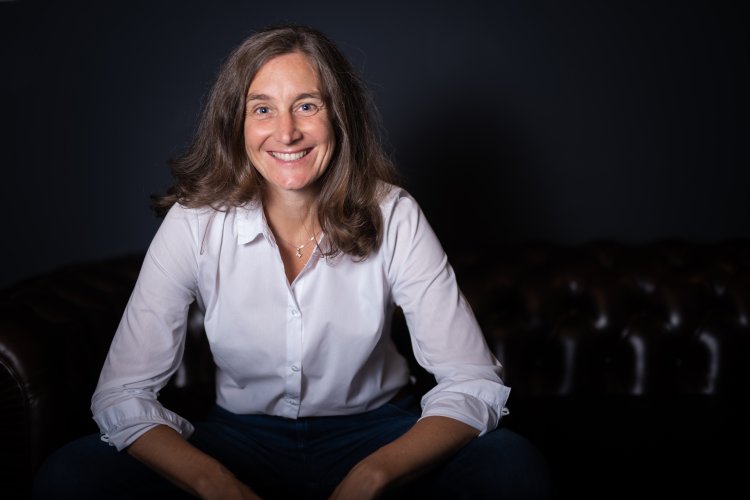
And now a little more about me: I grew up in the most southern land of Austria, Carinthia, in a small town called Klagenfurt, situated close to a wonderful lake. Most of my childhood and youth I spent either in the water or in the saddle of my favourite horse. So growing up as an aquatic animal, it was only a little later that I discovered my great passion for the mountains. But between the waters and the rocks, one will find the planes, and that is where I spent my time as a student: Vienna was the city of choice for my translation studies, and the city of my heart too. And for one year I was even allowed to discover the melting pot flair of “Europe’s capital”, Brussels. Living in these two cities was a profoundly enriching experience: These years taught me to always stay open-minded, to live with and in different cultures, to communicate in different languages, to think and speak, sing and dance in the most diverse and colourful way. They also taught me that money is not the most important reward for your work, but passion and satisfaction, and that sometimes a grateful and honest thank-you pays more than a remittance to your account. These years taught me to approach projects with confidence and courage, to encounter clients with openness to their individuality, creativity, and maybe sometimes even to their obstinacy.
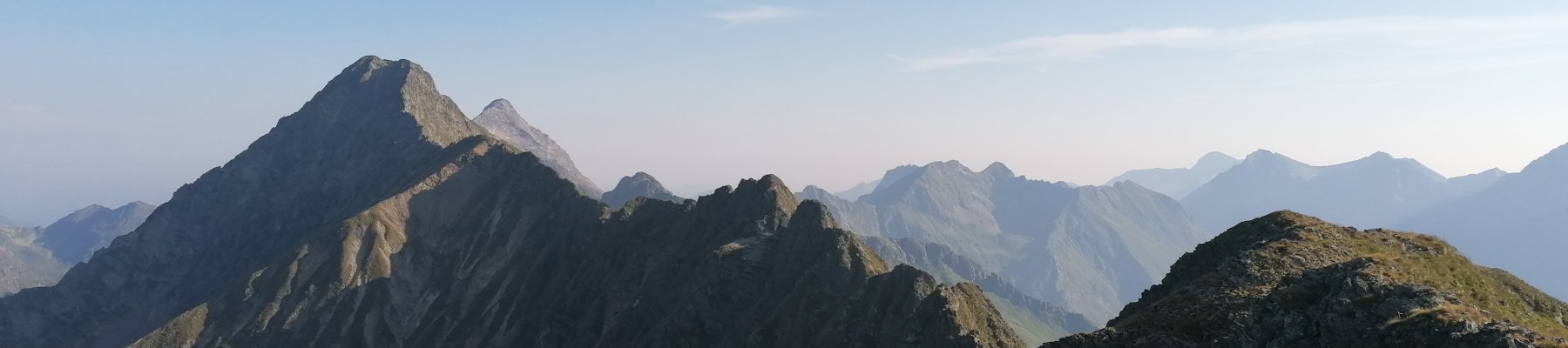
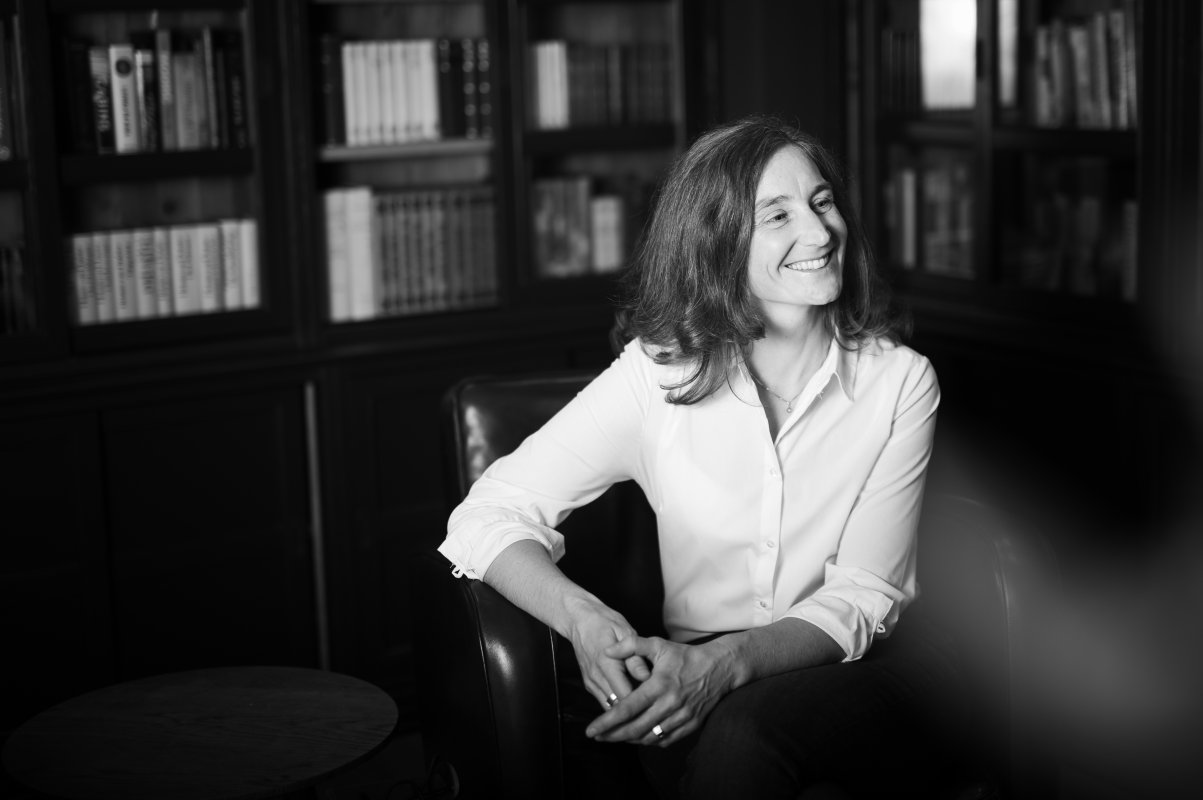
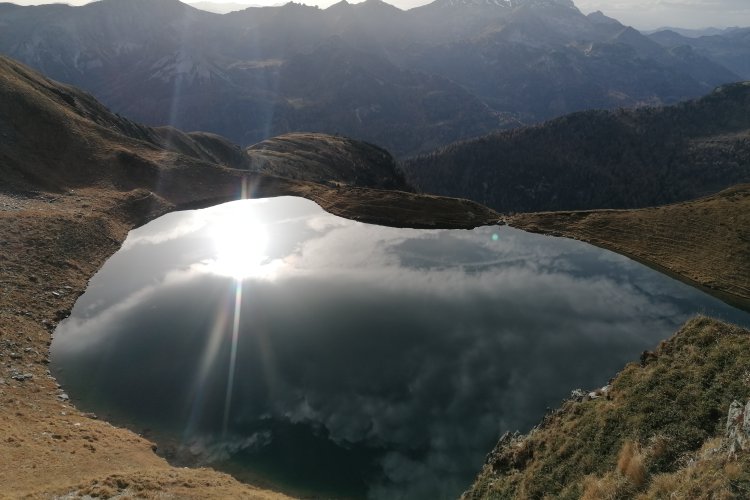
The time I spend in nature represents the counterbalance to my professional routine. I love to escape into the mountains, to dive into a crystal clear mountain lake. It clears my mind, it makes me smile. By the way, all the pictures on my website are taken on my short trips to the outdoors. Besides nature, it is my piano giving me moments of escape into the wonderful world of music. It is my three children who are my greatest teachers instructing me, day by day, in endurance, placidity, libertinism, and hilarity. And it is our cat who teaches me everything I need to know about unconditionally loving life.